NovelSisters

watching, reading, and writing stories

Deadlines

Time, Levy, Deadline, Hand, Leave, Pen, Note, Calendar

Image Source: https://pixabay.com/en/time-levy-deadline-hand-leave-pen-481444/

This week I’ve been feeling the pressure of deadlines. Whether it’s applying for a job, turning in a paper, or even finishing your own to-do list, we all have deadlines. They can be frustrating, stressful, and almost give you a panic attack. I know there were definitely times in school when I’d have nightmares that a paper was actually due the next day and I was going to miss my deadline.

A world without deadlines sounds nice, but in reality, we need deadlines. Or at least I know I do. It’s hard for me to start working on a project if there is no “due date” no “deadline” no ultimate completion date. I hate the stress of deadlines, but I love what they force me to do; start working.

It seems like the only projects I ever finish are the ones that have deadlines. Even the fun projects, like painting, or writing, have to have deadlines or I just won’t finish them. For example, I’ve been working on a novel for years, but it wasn’t till I started forcing deadlines onto myself that I actually made progress. The first deadline I gave myself was to finish the manuscript by November 1st so I could participate in National Novel Writing Month with a sequel to my “finished” first novel. And this goal, or “deadline” got me working. I started writing more and more. I worked so hard that I even finished my first draft before November 1st and had time to start planning my sequel.

But now, I’m in another mode of writing; the editing phase. I wrote about this last week in my blog. Editing requires deadlines just as much as writing does. Well, my deadline is June 30th. I only have a few days left to finish making last minute changes and corrections before I get 5 sample copies of my very first novel printed. It’s exciting, but also nerve wracking. Sometimes I wish I had more time. However,  I don’t think more time would actually help in my situation. It would just give me more time to watch Netflix and put off actually finishing my editing.

So even though deadlines sometimes feel like a curse, I think they are actually a blessing in disguise…

So what about you? Do deadlines help you actually start working and stop procrastinating? Or do they just make life more stressful? Leave a comment and let me know what you think.
Leave a comment »

The Editor

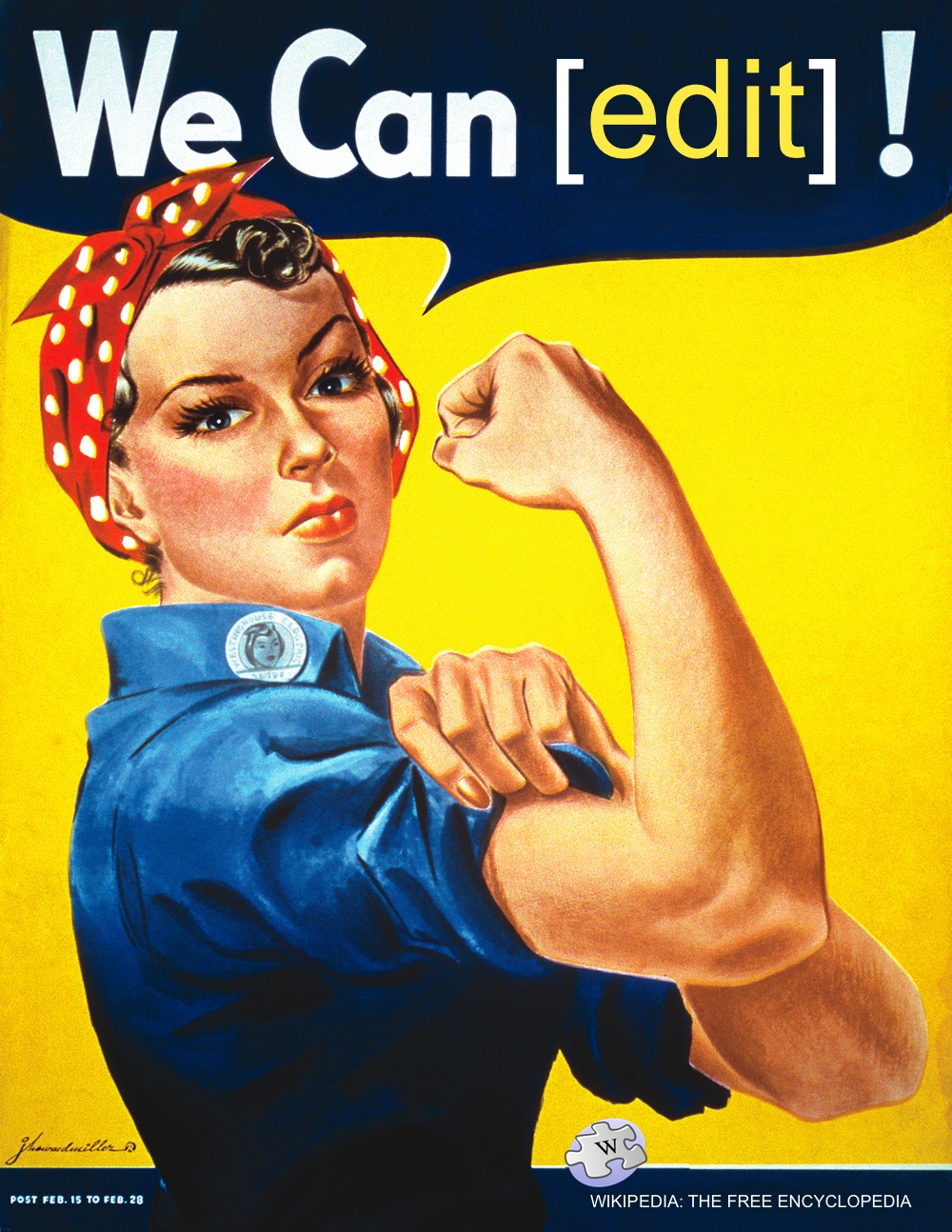
Image Source: https://en.wikipedia.org/wiki/Wikipedia:Hatemag_Feminist_Edit-a-thon_Berlin

Let’s face it, every writer needs to edit. But at some point, we need a little help.

I remember some of my first English classes in high school and starting to learn how to edit other people’s work. It’s kind of funny how we so easily spot errors and unclear ideas in another person’s work but when we stare at our own, we can’t figure out what’s wrong or what we need to change.

Recently I’ve been working on editing my first novel, and it’s hard. I’ve read over the whole thing so many times I’ve lost count, yet there’s still little details that need to be changed. Thankfully, I have friends and family to act as my editors. Even if they aren’t “professional” they still notice when I use “their” instead of “they’re” or accidentally type the same word twice. Even plot lines and illogical scenarios are easily spotted by another person’s perspective. I was quite surprised when one reader came back to me after reading about 8 chapters and handed me a large sheet of paper with several notes. For some reason I thought I was “done” that only one or two errors could possibly be left after all my own editing and hard work. But as I made my way through the long list of things this “editor” had noticed, I realized just how much work I still had to do.

I think the problem I have, and probably a lot of writers have is getting stuck in our own little world. Everything makes sense to us here, whether because of long thought and careful decisions, or because it has stayed the same so long, that it feels normal. But once someone new, who hasn’t seen all the drafts, revisions, changes, and subplot starts reading our work, things we never noticed become apparent.

And it’s kind of cool to be on the other end of the line; to be the editor. You get to read someone’s work and point out things, give suggestions, say what you liked and didn’t like and know in the end the author could listen to you or totally ignore you. And it’s cool to come back to the finished product later and see what the result of your suggestions were.

When I was in college, one of my professors told a story about how she suggested something about adding potatoes into a short story by a fellow writer. And the guy actually used her idea. I saw the same thing happen over and over in the creative workshops I attended. Someone’s different perspective gave a spark to an author. We all need that sometimes, whether it’s encouragement that what we’re writing does actually make sense to  other people, or a critique that helps us see what needs to change. Even writer’s block can be helped by a friend reading your work and telling you what they think.

I know author’s are often criticized as not allowing anyone to read their work till it is “finished.” But I don’t think that is the way it should be. You may not be the person they want critique from, but I bet they’re letting someone read their work and give them feedback. Because that’s how we become better writers, we keep learning, keep reading, and keep listening to what others are saying.

So thank you to anyone who’s been an editor, whether in grade school when you read your classmate’s essay, or professionally. Thank you for adding your perspective to an author’s world. I’m sure there are several writers out there, who wouldn’t be where they are now, if it wasn’t for a good, or several good editors.

Leave a comment »

What’s in a name?

So I know I’ve been a little distracted lately and I haven’t gotten to post in awhile. I’m sorry about that. I know I could make all sorts of excuses, but that won’t change anything, so on to the blogging part.

Names. I’ve been thinking about names off and on for the past few weeks and ever since Alicia wrote her first post about coming up with good names for characters, I’ve been wanting to add my own opinion to the subject. Names are very important, not just in books or movies, but in everyday life. Our names almost define us. We become so connected with a name that eventually to think of the name is to think of the person connected with it automatically.

I remember one time some of my friends were trying to think of a baby name and found it really difficult. They were both teachers and between the two of them, it seemed like every name in the book was already connected to a student that they had taught. It took quite awhile, but they finally found a name that stuck and didn’t remind them of some previous relationship.

Names also change, or can change. I know several people that have started going by a nick name or their middle name instead of their first name. In new situations or around different kinds of people we sometimes adjust who we are, including our name. Sometimes I wonder how people can change their name. Like, I understand that you can legally change it, or ask people to start calling you something else, but it sounds so hard. How do you teach your brain to start reacting to a new name the way you’ve always reacted to your old one. I’ve heard that if you hear your name whispered even if it’s hardly noticeable, your brain will notice. I remember seeing this one commercial for a fire alarm that calls a child’s name instead of just beeping because even though a person might sleep through loud noises, when your brain hears your name, it responds. I think that’s so cool. And makes me more amazed that people can change their names and somehow connect with their new name, even more so than with their old one. It’s like you can literally become a new person.

But in some sense we don’t have control over our name, or at least not completely. Our parents choose a name for us in the first place. And even if we legally change it, that doesn’t mean people will call us what we want to be called. The bully calling a kid “Four Eyes” has “named”  or “labeled” that kid without the kid’s permission. And even when it’s not intended for sport or mockery, other people can still decide to call us what they want. For example, just recently one of my friends said I’m going to call you “Lyds” instead of “Lydia.” But I think this works well, at least in some cases. I think when we hear what others call us, we can get a better sense of who we are. I remember when I was growing up, that my younger brother had several nicknames, he was “JD” or “Jonny 5” or “Jonny Boy” or just plain “Jonny” but we rarely called him by his real name: Jonathan. It just didn’t seem to fit his personality. Jonathan was too formal and long, and my brother was so fun-loving and energetic that a shorter name just seemed to fit. Now that he’s older, he tells people to call him “Jonny.” It’s just who he is.

And characters, just like people have a personality that connects with a certain name. When I’m writing, I often start with a generic name and have to change it later, after I’ve explored the character more deeply. There was one time I thought long and hard about a good name for a character, but I hadn’t thought of the character’s personality. I started using the name “Calvin” for about 3 paragraphs and then by accident started writing “Caleb” instead. I didn’t even notice. I used this name till the end of the book and even started a sequel with the same name. When I finally went back to edit, I found the first few intro paragraphs about this character and realized his name had changed. Part of me wondered if I should go back and change all the places where I had called him “Caleb” and return it to the original “Calvin.” After all, I had intended for his name to be “Calvin.” But almost instantly I thought “No! This character is Caleb! I can’t separate the name from the person, it’s who he is, there’s no going back.”

So, in conclusion, names are part of us. We may not think about it that much, but they are important. They help tell us who we are and they stick with us, even if we don’t want them to.

Well that’s my thoughts on names, it might be a little scatterbrained but I’ll blame that on not blogging for two weeks.

Let me know what you think about names.

3 Comments »

Well it’s about time!

Hello everyone!

This is Alicia, and this is my first blog post. I seriously fail at blogs, I never seem to write in them and when I do my posts are usually boring. Maybe I can break that streak with this one, because I’m not the only one writing this blog, but we will just have to see.


There are a few things on my mind at the moment, but right now I’m going to talk about names. Or more specifically, coming up with names, because you need a few good character names to get your audience interested. Now don’t get me wrong, there are no bad names, and common names are fine to use, but if you want to change it up some I have a few ideas that I use to come up (or find) unique names.

First off is the ever helpful Google translate tool. There are many languages that basically have the same letters as English but have a much more unique ring to them. I personally have used Swahili and Latin the most, but you can play around with it! And the cool thing about translating is that you can use common words to get a cool name. For example, in a roleplay group I used the Swahili word for tear, which is Chozi. Now I don’t know about you, but that sounds like a pretty good name, and it connected with my character’s back story, which is quite sad, thus ‘tear’.

The other main tool I use is mishmashing, which doesn’t sound like a good tool, but it really is. I used this for pretty much all of the names in my novel. All you need to do is pick a name you like, for example, I always liked the name Seth. It’s a simple name that could totally work for your character, but if you want to spice it up some, play around with the letters. Add some in the middle, play around with the endings. I did this and came up with Senith, the only difference about the name compared to Seth are the ‘n’ and ‘i’.

If you can’t think up a good starting name, just pick a letter and start messing around with it, trying to come up with something that sounds like a name. You may go through a lot of bad sounding ones, but in the end you could get a really unique one.  A few of my background characters got their names this way, and to me they don’t sound that bad. One of them I came up with was Kendren, it’s a mix of elements from different names, but it really works.

I have one more tip on writing names before I go. Don’t be afraid to go into the strange sounding words, they could even be describing words, or just random words that you’ve always liked. I came up with one of my favorite characters this way. Vista had always struck me as a cool word, it sounded unique and I liked it as a name. But something seemed off, so I used a little mishmashing with it as well, and you know what the result was? Vistina. I love that name, it fits my character so well and I’ve never heard it before in any book. That makes it feel special, it’s seems to make my characters stand out to where I know I will remember them, and my readers will too.


Look at Vista...haha, I'm clever xD

Look at Vista…haha, I’m clever xD

That’s all for now I suppose, until next time!

Alicia

Leave a comment »

How to write in a fastpaced world

I’ve noticed recently that storytelling has changed in recent years. I supposed it’s always changing, but it’s so gradual that we don’t notice it. However, if you ever go back to something written or filmed years ago, the change is very apparent. I was watching Knight Rider, a TV show from the 80s on Netflix the other day and I realized how slow the plot seemed to move along. There were several scenes of the characters just walking or looking at each other without dialogue. It seemed awkward, and a little boring. At some points I just had to laugh, because the acting seemed so fake. Granted, this was the first season, so I’m sure some things improved once the show got rolling. But there was still a major difference between that show, and any other 1 hour TV show that is airing now.

I was talking with some fellow writers about the changing culture and the impact social media has had on how we write stories. We’re so used to instant messaging, instant access, something always grabbing our attention, that a slowly built story is very hard to get through. It’s ‘boring’ unless we take the time to invest in it and get caught into the story. This kind of ties in to one of my earlier posts about giving myself time to read a book and actually get sucked in to the plot. I’m so used to my time being torn between little responses to texts and messages that it can be hard to just sit and focus on one thing for an extended period of time. Even now as I’m writing this blog, I’m messaging with a friend on Facebook.

So with all these little distractions and instant entertainment, I believe the way to write a story has shifted. As I’m working on my own novel, I find myself trying to throw in action and suspense at every turn so my readers will stay interested. Instead of a long history to set up the story, I jump right into the suspense. Otherwise my readers will get bored and stop reading. I’m also trying to give less descriptions, or complicated images and instead rely heavily on action and dialogue.

The ladies I was talking to suggested that because we can see so many things with TV, internet, and movies, we don’t need to be told what something looks like. Earlier writers had to describe things that their readers may never have seen before, but if we really want to know what something looks like, we could Google an image.

Of course, my opinion isn’t the only one that matters. Feel free to give me your opinion on the current culture’s influence on writing. I’d love to hear it.

2 Comments »