NovelSisters

watching, reading, and writing stories

Society, Morals, and Choice in Movies

10. Katniss Everdeen - Hunger Games

https://www.flickr.com/photos/wolfgangkuhnle/10511191683


Recently I’ve gone to see both the new Hunger Games movie and Ender’s Game in theaters. In the process of doing this I’ve also seen previews of a new movie coming out next year called Divergent. All of these movies are based on book series and all of them are coming out around the same time. And that’s not all that these movies have in common. They also bring up deep themes about society, morals, and choice, and the various perceptions of what’s right and what’s wrong.

Now these story lines are all unique and I haven’t read the Divergent series so I can’t say too much about how it fits into this trend, but it seems like there is a strong current towards these topics, at least in popular films. And I think it’s worth looking into.

Are these types of books and movies becoming more popular because the idea of being controlled by others and not being free to make your own decisions is a growing fear among the United State’s population?

Is it simply that stories that portray a darker future seem more realistic and connect with us more than the fantasies of years past?

Or is it just money hungry publishers and producers that saw one success and that led to others trying to mimic the successful book or movie and make some money?

In any case, I think it’s worthwhile to look more closely at what is similar in all of these story lines. In the Hunger Games we are given the perspective of Katniss, who is living in an unjust world that tries to punish the descendents of rebels in hopes of avoiding any future conflicts. Their punishment includes restrained freedoms, limited provisions, little privacy, and the horror of children being forced to kill each other in the Hunger Games. In essence it is a scary society, at least from Katniss’s perspective. And as the audience we can all agree with her that there is something sickly wrong with the way things are set up.

However, we are also given glimpses of another perspective, those of the people who are privileged and live in the Capitol. They seem completely unaware of the evils in this system. They have plenty to eat and happily go on eating after they are full, without thinking of the thousands of people who are starving. In addition, they focus on entertainment so much so that the Hunger Games becomes a grand event to be watched, celebrated, and invested in, instead of seeing it for the slaughter that it is.

To the audience, these opposite perspectives reveal how wrong the collective thought of a society can be. Just because everyone says “it’s okay,” or “it’s fun,” or “may the odds be ever in your favor” that doesn’t mean that what they’re talking about is morally right. Seeing this in the movie, could force us as the audience to start evaluating our own culture and what we view as right only because our society says it is, and not because it actually is. Similarities can be seen in our own culture as we hear about starving kids in Africa but still insist on eating our super-sized meal. The list could go on and on, with many subjects becoming touchy because it is real and affects us directly.

Ender’s Game, however, takes a different take on our world’s possible future. In this storyline, it is not people who are viewed as the enemy, but an alien species. In this world people fear the possibility of another attack from aliens so much that they decide to train children to become the best army possible. Kids are tested for brilliance and told that learning to kill is okay. I haven’t read the book series, so I could have some of this wrong, but I did at least see the movie. And it haunted me that young teenagers could be trained for a war, and told over and over that the tests they are going though are simply that; a test. Only to find out that the last test was no test at all, but a real war, that caused real deaths.
It was a horrifying realization to the main character, Ender, to find that he wasn’t winning a game, but he was killing real creatures and destroying their entire planet. He wished he had known the truth so that he could have acted differently.

I think this plays into our society as well. I’ve heard about countless debates over whether violent TV shows or video games are appropriate for children, or if they can be directly linked to real violence. This movie plays around with these thoughts and I think brings us some valuable questions.

When does something become more than a game?

Is it okay to trick kids, or use their intellect without their moral consent?

Who should be allowed to make the ethical decision: Is it generals, the government, or the individual who is doing the killing?

I think both of these movies have serious undertones that reflect our own culture’s perspective. There’s a reason that these movies and books are popular now, and not fifty years ago. Maybe the government taking control of health care is scary to people. Or maybe there’s a general fear of the future instead of a hope of better days to come. Who knows, there could be thousands of reasons, and each one could be different for each individual. But collectively as a society, something in these movies is striking a chord and resonating with people.
Comments Off on Society, Morals, and Choice in Movies

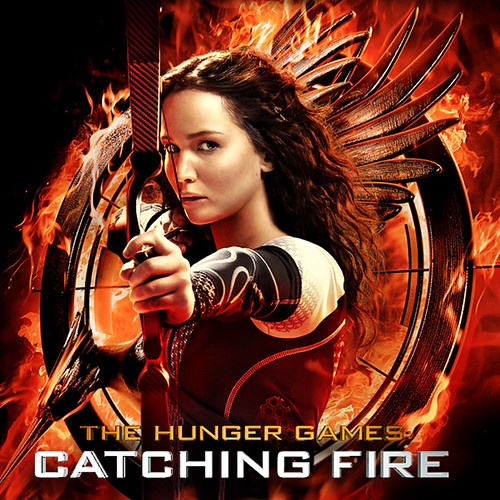
The Hunger Games: Catching Fire

THE HUNGER GAMES CATCHING FIRE

This past weekend I went to see the new Hunger Games movie in theaters. A couple of years ago I started hearing about the Hunger Games series and when the movie came out I was very excited to see it. I really enjoyed the first movie and the sacrifice Katniss was willing to make for her younger sister Prim. At the end of the movie I was very intrigued by what would happen in the capital now that the Games were over. I had a feeling this corrupt system was heading towards destruction and our heroine had a part to play in the outcome.

I couldn’t wait for the next movie, so I read the books. And I’m happy to say this next movie follows the book really well. Now it didn’t include every single detail of the book, and a few parts felt rushed, but that tends to happen when you turn a full length novel into a 2 hour movie. Some things just don’t fit.

I was very intrigued with the view into President Snow’s life that we are given in the movie. Since the book is written form Katniss’s perspective, we are only given little tidbits about the President’s life. But the movie takes this a bit further; revealing his relationship with a granddaughter at home, and his reasoning behind the actions that he takes.

The only thing I have to complain about was a scene in Quarter Quell Hunger Games. At one point the group of victors that we are following gets attacked by some savage monkeys and the camera effects and lighting goes a little over the top. There are so many cuts and different angles that I lost track of which character I was watching and because everything was so dimly lighted, I could barely tell what was going on. The filmmaker might have intended this “shaky” cam filming to make the danger and confusion more real to the audience, but it had the opposite affect on me. I found myself thrown out of the movie and realizing that I was in a theater after all. I remained “outside” the movie experience until the action calmed down and the fight was over. Then I was able to reenter the story.

Other than that, I can’t complain too much. The storyline followed the book very well and all of the characters seemed appropriate to me. Of course I haven’t read the books in over a year, so that probably helped. See my other post about not watching movies in close proximity to reading the book: https://lydiamhill.wordpress.com/2013/09/24/the-hobbit-and-movie-adaptations-2/

In conclusion, if you are a fan of the first movie, or the book series, I’d say you’ll most likely be satisfied with this movie’s performance.

Leave a comment below if you want.

4 Comments »

The Novel’s Journey

I know I don’t mention it on this blog a lot, but I am a writer. Specifically I’ve been working on publishing my first novel for the past several years. Writing a novel is a long process. Not only does it take perseverance to actually finish, it also takes serious thought and editing skills. On top of that pile on the whole mess of trying to self publish and you can start to see why it takes so long to actually finish.

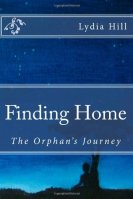
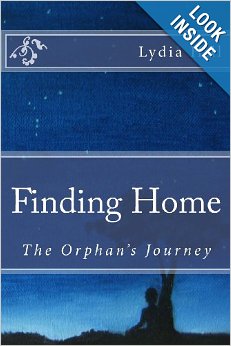
But I’m proud to announce that my novel “Finding Home; The Orphan’s Journey” is now finished! It is available on Amazon today!

Cover

http://www.amazon.com/Finding-Home-The-Orphans-Journey/dp/1490556427/ref=sr_1_1?ie=UTF8&qid=1384877071&sr=8-1&keywords=Lydia+Hill+Finding+Home

I’d like to share a little about how this story came to be, and perhaps in the future I’ll post some small sections from the text itself. But if you want to go ahead and purchase a print copy, feel free.

This novel began as an sketchy idea. Oftentimes as I’m going to sleep I think up some story in my head. Usually I’ve forgotten it by the next morning and most of them aren’t worth remembering, but this time, I liked the idea. I decided the next morning to write out a generalized plot line. It wasn’t a super long plot, and most of it was the big picture. In essence I knew I wanted to write a story about an orphan who goes on a quest to find his long lost family, in hopes that they are still alive. I had a few ideas of what should happen to him on this quest, like running into a Princess and saving her life. But there were lots of gaps and holes, and I had no idea how to end the story. Also, the big picture was very different from actually writing a book, putting in dialogue and description and organizing the whole thing into chapters. All of this actual writing was a big job that I had never attempted before.

The writing process started out slow, I started with a grand back story explaining what had actually happened to this orphan, but eventually realized that this was not a great way to start a book. It was good to write so I knew what had happened, but it wasn’t needed for the reader.

As years continued, I still dreamed about one day actually finishing my book, but high school was nearing it’s end and my busy college days lay before me. I thought that taking Writing classes in college would help motivate me to finish, but instead of writing my novel, I wrote other papers, and learned more about what it takes to write well. In addition, during my college years I was able to secure a job at a local middle school where I was supposed to read with students. As I saw examples of good and bad literature in the school library, I began to think again about my novel, and giving younger kids an exciting book that was also clean and safe. I was really tired of kids coming across crude language and telling me “I’m not allowed to say this.” Of course you’re not, I was thinking, this stuff shouldn’t be in a kid’s book. There’s got to be better stuff out there. And so I decided that my novel could be one of these ‘better’ books, at least in the sense of crudeness.

By the time I had graduated from college, it had been a long time since I’d actually tried to write anything connected to this novel. When I finally looked back at it, I realized how simple the language was and how difficult it would be to “fix” what I’d already written. But I decided to try. Now that there was no homework to do, I had time to write.

So I recruited a few friends to give me feedback on my early chapters, then I started writing furiously. By writing very long research papers in college, I had learned that writing was not such a big challenge after all, I just had to do it. Another contributing factor was the National Novel Writing Month. My sister had won the contest my senior year of college, and I began developing a plan of finishing my novel before November, and then trying to write a sequel during the contest month. With this goal in mind, I worked much more diligently. By November 1st I was done with my rough draft and ready to write more.

After the busy NaNoWriMo season, I entered a new phase: editing. Some of it was fun; developing chapters, making artwork, or adding descriptive details. But editing also meant scrolling for typos multiple times, and having a few friends read the whole draft for errors. As you can imagine, this was a long process that took several months, but finally I was nearing the end. Figuring out the cover and description was actually not as hard as I thought it would be, thanks to Create Space’s program. And now I’ve come to the end of my journey, at least for this novel.

So if you’re interested in starting a journey for yourself, buy the book. Or if you’ve already started out on your own book, leave me a comment and let me know where you are in the writing process.

2 Comments »

The Hobbit and Movie Adaptations

The Hobbit text

I’ve been rereading the Hobbit recently. As you might recall, right before I took my trip to Haiti I watched the movie and got all excited about going on my own adventure. Well now that I’m back, I’ve decided to read the book again. I haven’t read it in years and there are many parts that I had completely forgotten about. Reading it is getting me excited for the next movie in Peter Jackson’s trilogy.

Speaking of movies based on books, I’ve always been interested in film adaptations. It’s an interesting process for whoever is writing the screenplay, because you can’t take the actual book and make it a movie, you have to take out parts, change things and make it flow as a movie. No audience would sit through a ten hour movie, so changes have to be made. However, the changes made are very noticeable to an audience that loves the original story. I think it takes a brave person to turn a book into a movie; you could get a lot of praise or a ton of criticism.

I find it odd that some filmmakers choose to add in some scenes that are not based on the book. It seems more logical to me to use the book’s material first and only cut out what is not necessary, not create new scenes that have no basis in the book. However, I can’t complain too much, because there are times that I really enjoy what the filmmakers have changed. For example in the Lord of the Rings: The Two Towers, a scene is added with Aragorn getting separated from his friends. This scene has no basis in the book, but I love it. It adds suspense and drama to the story and honestly it’s one of my favorite scenes to watch.

But most of the time when filmmakers do this I am angry. One of the best examples of this comes from the first Percy Jackson movie. I had read the book before I saw the movie, so I knew all about the crazy adventure that had happened in the book. And there were a lot of things wrong with the movie, but one thing that seemed worse than the rest was adding a pointless battle scene at the Parthenon in Nashville. It had no basis in the book whatsoever and took time away so that other more interesting plot points had to be left out.

Although there is some fault to a filmmakers decisions, I’ve also found that I am partly to blame for my reaction to a movie that is based on a book. I’ve found that depending on how recently I’ve read a book, I will either enjoy or not enjoy the movie adaptation. It seems that if I either have no clue what the storyline is supposed to be, or have read the book so long ago that I can’t remember details, that I thoroughly enjoy the movie adaptation. However, if I read the book right before seeing the movie, all I can see is all the changes that were made and feel upset at the “good” parts that were left out, or the things that were changed.

A perfect example of this comes from my experience watching the Chronicles of Narnia movies. I can’t remember exactly when I read each book, but I have read them all now, and seen all of the movies that have recently come out. However my responses to the second and third movies were extremely different based largely on the fact of when I had read the book it was based on.

When I saw Prince Caspian, the second movie, I had recently read the book and was upset by even little things like the hair color of characters that I had pictured differently. I noticed every little thing that was changed, like added battle scenes, and was left upset that the movie didn’t live up to my expectations.

However, when the Voyage of the Dawn Treader came out a few years later, I watched it without rereading the book. I could only remember a few relevant parts from the book, all of which were included in the movie. So I ended up loving the movie, the message, and found the whole experience very enjoyable. In fact I felt at the time that this third movie was the best of the three. However, when I discussed the movie with a friend, I found that she had not enjoyed it. She kept pointing out little changes that I hadn’t noticed and complaining that it wasn’t like the book so she didn’t like it.

In light of this, my new plan for seeing movie adaptations is to either watch the movie before I read the book, so I can enjoy both, or wait to reread the book until after I’ve seen the movie. That way the storyline isn’t too fresh in my head. I guess I should have waited to reread the Hobbit until all three movies have been released, but I couldn’t wait. Oh well, hopefully I’ll still enjoy the movie and not be too critical of the filmmaker’s decisions.

So what’s your favorite movie adaptation and why? Or what book would you like to see turned into a movie? Leave a comment below.

8 Comments »

“I’m going on an adventure!”

Image Source: http://s49.photobucket.com/user/filterdose/media/BilboAdventure.gif.html

One of my favorite scenes from The Hobbit, is where Bilbo is running after the dwarfs and yelling to his neighbors “I’m going on an adventure!”

There’s something exciting about going to a new place, doing new things and even though it’s a little bit scary, ultimately it’s very thrilling and you want to tell everyone.

I’ve noticed that in many novels, or stories, the main plot involves a protagonist leaving what is comfortable and going to where things are unexpected. Why is “the journey” so important to a story? Does is force the character to grow, to change, to become something other? There are many great stories that don’t involve a journey, but every story has a change that takes place. In The Hobbit, Gandalf clearly tells Bilbo that if he is to return from this “adventure” he will not be the same. Change, whether it’s from journeying to a new environment or current relationships becoming something different, is scary. We like things to stay the same, to be comfortable. Just as Bilbo is very sure that adventures is not what he wants, we often want everything to stay the same.

However, things are always changing, we can’t escape it. And change can be a good thing. Once everyone has left Bilbo to start the adventure, he finds himself alone in his big house, and something occurs to him. Does he really want this? Suddenly the thought of missing out on something great becomes more unbearable than the thought of leaving a comfortable home. And even though going means change, Bilbo decides it’s worth it.

I’m going on my own adventure in a couple days, I’ll be leaving the country for a whole week. And I’m excited, just like Bilbo I want to yell “I’m going on an adventure!” This will mean that I’ll change, but just like Bilbo, I’m embracing it.

However, this means I won’t be posting for awhile…

But I’m sure I’ll have “a tale or two to tell” when I get back.

Leave a comment »

Deadlines

Time, Levy, Deadline, Hand, Leave, Pen, Note, Calendar

Image Source: https://pixabay.com/en/time-levy-deadline-hand-leave-pen-481444/

This week I’ve been feeling the pressure of deadlines. Whether it’s applying for a job, turning in a paper, or even finishing your own to-do list, we all have deadlines. They can be frustrating, stressful, and almost give you a panic attack. I know there were definitely times in school when I’d have nightmares that a paper was actually due the next day and I was going to miss my deadline.

A world without deadlines sounds nice, but in reality, we need deadlines. Or at least I know I do. It’s hard for me to start working on a project if there is no “due date” no “deadline” no ultimate completion date. I hate the stress of deadlines, but I love what they force me to do; start working.

It seems like the only projects I ever finish are the ones that have deadlines. Even the fun projects, like painting, or writing, have to have deadlines or I just won’t finish them. For example, I’ve been working on a novel for years, but it wasn’t till I started forcing deadlines onto myself that I actually made progress. The first deadline I gave myself was to finish the manuscript by November 1st so I could participate in National Novel Writing Month with a sequel to my “finished” first novel. And this goal, or “deadline” got me working. I started writing more and more. I worked so hard that I even finished my first draft before November 1st and had time to start planning my sequel.

But now, I’m in another mode of writing; the editing phase. I wrote about this last week in my blog. Editing requires deadlines just as much as writing does. Well, my deadline is June 30th. I only have a few days left to finish making last minute changes and corrections before I get 5 sample copies of my very first novel printed. It’s exciting, but also nerve wracking. Sometimes I wish I had more time. However,  I don’t think more time would actually help in my situation. It would just give me more time to watch Netflix and put off actually finishing my editing.

So even though deadlines sometimes feel like a curse, I think they are actually a blessing in disguise…

So what about you? Do deadlines help you actually start working and stop procrastinating? Or do they just make life more stressful? Leave a comment and let me know what you think.

Leave a comment »

Well it’s about time!

Hello everyone!

This is Alicia, and this is my first blog post. I seriously fail at blogs, I never seem to write in them and when I do my posts are usually boring. Maybe I can break that streak with this one, because I’m not the only one writing this blog, but we will just have to see.


There are a few things on my mind at the moment, but right now I’m going to talk about names. Or more specifically, coming up with names, because you need a few good character names to get your audience interested. Now don’t get me wrong, there are no bad names, and common names are fine to use, but if you want to change it up some I have a few ideas that I use to come up (or find) unique names.

First off is the ever helpful Google translate tool. There are many languages that basically have the same letters as English but have a much more unique ring to them. I personally have used Swahili and Latin the most, but you can play around with it! And the cool thing about translating is that you can use common words to get a cool name. For example, in a roleplay group I used the Swahili word for tear, which is Chozi. Now I don’t know about you, but that sounds like a pretty good name, and it connected with my character’s back story, which is quite sad, thus ‘tear’.

The other main tool I use is mishmashing, which doesn’t sound like a good tool, but it really is. I used this for pretty much all of the names in my novel. All you need to do is pick a name you like, for example, I always liked the name Seth. It’s a simple name that could totally work for your character, but if you want to spice it up some, play around with the letters. Add some in the middle, play around with the endings. I did this and came up with Senith, the only difference about the name compared to Seth are the ‘n’ and ‘i’.

If you can’t think up a good starting name, just pick a letter and start messing around with it, trying to come up with something that sounds like a name. You may go through a lot of bad sounding ones, but in the end you could get a really unique one.  A few of my background characters got their names this way, and to me they don’t sound that bad. One of them I came up with was Kendren, it’s a mix of elements from different names, but it really works.

I have one more tip on writing names before I go. Don’t be afraid to go into the strange sounding words, they could even be describing words, or just random words that you’ve always liked. I came up with one of my favorite characters this way. Vista had always struck me as a cool word, it sounded unique and I liked it as a name. But something seemed off, so I used a little mishmashing with it as well, and you know what the result was? Vistina. I love that name, it fits my character so well and I’ve never heard it before in any book. That makes it feel special, it’s seems to make my characters stand out to where I know I will remember them, and my readers will too.


Look at Vista...haha, I'm clever xD

Look at Vista…haha, I’m clever xD

That’s all for now I suppose, until next time!

Alicia

Leave a comment »

Waiting

Have you ever had trouble waiting? I know I have. I have to admit there’s been a few times where I skipped to the last page of a book I was reading just to get a glimpse of how everything would turn out. Or if a movie I really wanted to see was coming out soon, I’d watch the previews over and over trying to see if there was any new bit of the storyline given away in the 90 second commercial.

It’s hard to wait, to go through all the hard stuff, not knowing what will come of it. It’s even harder in real life when there’s no way to skip ahead and read a few pages of the last chapter. I wonder why it is that we want to know the future. Why is it so hard to wait? Even waiting for an author to finish their next book in a series is excruciatingly difficult. I know my sister can’t wait for the next Heroes of Olympus book to come out, and I’m looking forward to Jeff Shaara’s new book too.

And yet, there’s always a time of waiting. Even in my own life there are times when all I seem to be doing is waiting. I feel like there is something coming, something around the corner, but I don’t know what it is, and all I can do it wait and see what happens. Well… not exactly. Actually, I’ve realized that there is a danger in focusing too much on the outcome, the future, the ending. It kind of ruins a book to know how it ends before you get there. And I can’t tell you have many movies were ruined for me because some friend had to tell me about the plot before I saw the film. There is something good about not knowing, and instead enjoying the moments I’m living right now.

Waiting is a hard thing to do, and I haven’t mastered it yet, but knowing there’s someone in control does make it easier. Just like an author of a novel is connecting characters and forming situations all directed towards a final outcome, I know that God is directing my life. And even though I don’t know exactly what my future holds or how it will all work out, I know it will. And that is comforting. It’s kind of like when I was watching the new Star Trek movie this weekend. There was a scene where Captain Kirk was dying from radiation, and during the whole death scene and even afterwards, I had this calming thought running through my mind that the main character can’t die so everything would somehow turn out alright. And it did, the crew found a way to save him, and the story ended happily. Just like I know my life will end up alright, even if I can’t see the future.

Where does it end?

You can only see one piece of the path at a time

So what do you think?

Do you have trouble waiting for things or not knowing where you’re heading?

How do you get through it?

I’d love to hear from you, feel free to leave a comment.

Leave a comment »

How to write in a fastpaced world

I’ve noticed recently that storytelling has changed in recent years. I supposed it’s always changing, but it’s so gradual that we don’t notice it. However, if you ever go back to something written or filmed years ago, the change is very apparent. I was watching Knight Rider, a TV show from the 80s on Netflix the other day and I realized how slow the plot seemed to move along. There were several scenes of the characters just walking or looking at each other without dialogue. It seemed awkward, and a little boring. At some points I just had to laugh, because the acting seemed so fake. Granted, this was the first season, so I’m sure some things improved once the show got rolling. But there was still a major difference between that show, and any other 1 hour TV show that is airing now.

I was talking with some fellow writers about the changing culture and the impact social media has had on how we write stories. We’re so used to instant messaging, instant access, something always grabbing our attention, that a slowly built story is very hard to get through. It’s ‘boring’ unless we take the time to invest in it and get caught into the story. This kind of ties in to one of my earlier posts about giving myself time to read a book and actually get sucked in to the plot. I’m so used to my time being torn between little responses to texts and messages that it can be hard to just sit and focus on one thing for an extended period of time. Even now as I’m writing this blog, I’m messaging with a friend on Facebook.

So with all these little distractions and instant entertainment, I believe the way to write a story has shifted. As I’m working on my own novel, I find myself trying to throw in action and suspense at every turn so my readers will stay interested. Instead of a long history to set up the story, I jump right into the suspense. Otherwise my readers will get bored and stop reading. I’m also trying to give less descriptions, or complicated images and instead rely heavily on action and dialogue.

The ladies I was talking to suggested that because we can see so many things with TV, internet, and movies, we don’t need to be told what something looks like. Earlier writers had to describe things that their readers may never have seen before, but if we really want to know what something looks like, we could Google an image.

Of course, my opinion isn’t the only one that matters. Feel free to give me your opinion on the current culture’s influence on writing. I’d love to hear it.

2 Comments »

How do you get sucked into a book?

Sorry I haven’t blogged in awhile. It’s been a crazy week. But one reason I wasn’t writing, was because I was reading.

I’ve always thought that to be a good writer, I should learn from the other writers out there. Plus I’ve been trying to read this one book for months now. In case you were wondering it’s Jane Austen’s Emma. I’ve read some of her other books and enjoyed them. Then one day, some of my friends wanted to start a book club and read together. We decided on Emma and got several chapters in before life caught up with us. Now I’m not sure if I stopped reading because it felt more like an assignment than a pleasure… or maybe because I was trying to wait for the other book club members to catch up… but well I stopped. Normally, I’m not the kind of person to start a book and not finish it. I kept meaning to read and would get through a chapter or two every week, but that was it.

Then yesterday it happened… I was sucked in. Not every book does this to me, and I’m not sure if I can blame the author, sometimes it just depends on how much time I’m willing to give a book. But yesterday I was trying to take it easy after a busy week and screens weren’t very restful so I picked up Emma and started reading. Throughout the day I kept going back to the book, reading one more chapter, then one more until I realized I was sucked into the story. I had to know what would happen next. I meant to go to bed early but I found that the book was addicting and it was almost midnight before I could finally put it away for the night. Even now, as I’m writing this blog post, I’m itching to get back to the book and see how it all ends.

After thinking about this, I’m wondering if the way books are used in school could be improved. I guess I’m saying that books aren’t meant to be read one chapter at a time with deep meaningful discussion between each piece of the plot. I know people read at different paces, but ultimately, the books you love, are the ones you can’t put down, even if you’ve read them before. I would like to think every book has this capability, at least to someone out there who enjoys that type of book. I just wish there was some way to let books be enjoyable and also let kids learn from other people’s perspectives. Classroom settings just don’t seem to work…

I remember all the classics I had to read in high school, and… well I didn’t enjoy them. Maybe I just didn’t understand, maybe I was too young, maybe because it was an assignment, the book lost it’s appeal. But I don’t think I was the only one to feel this way. If there’s anyone out there that has an idea of how to change this, please let me know. I’d love to hear your opinion.

But for now, it’s back to reading…

Leave a comment »