NovelSisters

watching, reading, and writing stories

What is Christmas About?

Christmas, Star, Gold, Red, Lights, Christmas Time

Image Source: https://pixabay.com/en/christmas-star-gold-red-lights-513471/

It’s only five more days till Christmas hits us once more. But what is it all about?

Is it about pleasing children?
Maybe it’s about giving gifts or telling people you love them.

Is it about a little baby in a manger?
Or going to church and listening to hymns.

Is it about hanging stockings and waiting for Santa?
Or staying up late partying with friends and relatives.

Christmas can mean so many things to each person.

Sometimes all it means is a break from school, or a couple days off of work.
It could even mean more work as the Christmas rush crowds the store you work in.

It could mean a profit for businesses that have been staring at red numbers for the last two months.

It could mean new movies to go see, like The Hobbit, Saving Mr. Banks, or The Secret Life of Walter Mitty.

What’s it all about? Why all the busyness, stress, commercials, lights, music, and hullabaloo?

Why do we get so excited at this time of year?

Is it just a habit? Maybe the excitement of childhood just kicks back in,
or is it something more?

I don’t know about you, but this is what I think Christmas is about…

A MYSTERY.

Manger, Christmas, Santos Reyes, Christmas Crib Figures

Image Source: https://pixabay.com/en/manger-christmas-santos-reyes-69225/

It’s been sung about, talked about, and preached about for years.
How did an infinite, all-powerful, huge, perfect, holy, all knowing, all seeing, almighty, wise, perfect, beautiful God and King, become a finite, helpless, tiny, vulnerable baby. And why would He do such a thing?

If your life was perfect, free from stress, worry, hurt and pain, and you could control everything, would you leave that life and enter into a broken, painful, stress-filled life, where people are seeking to kill you and you can’t do anything about it?

That’s what Jesus did for us, and that’s what Christmas is all about. He left His perfect home, to bring are messed up world peace. He left His perfect life to give our broken one hope. He loved us, when we were unlovable. And one day He died on a cross in our place, so we could live.

As you go about the last minute Christmas preparations, remember what Jesus offers you: Peace, Love, Joy, Hope, and Salvation. Don’t leave his present unopened, enter in and enjoy what He longs to give you.

Merry Christmas!

Comments Off on What is Christmas About?

Why I Love Frozen

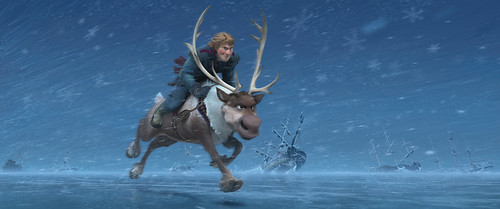
Sven from The New Disney Move Frozen

Alright, I admit it, I’m a sucker for kid’s movies. I’ve grown up watching Pixar classics and that animated real world just attracts me. I think the scenery is gorgeous and I love being able to step into this “perfect” world and enjoy a good story.

But the real reason that I enjoyed Frozen is because of its use of “love.”

I’ve seen countless movies, and read plenty of books that deal with the love story. Meeting a prince, falling head over heals, overcoming obstacles, and usually “true love’s first kiss” ends up saving the day. But Frozen takes a different spin on the word love.

In English we only have one word for this strong emotion, but really there are several types of love and they all can be very strong. There’s a parent’s love for their child, a sister’s love for a sister, a woman’s love for a man, and a friend’s love for another friend. All of these loves can make a sacrifice for another person. But usually we are made to believe that the love between a man and a woman is the greatest kind of love.

And as the movie begins, we might think that this is true in Frozen, we are soon pulled into a quick romance between the younger princess Anna, and her perfect prince Hans. Even as the movie progresses, we are encouraged to think that his love for her can be the solution to her problem.

Then we come to the plot twist, the perfect prince’s love was not real love, it is a selfish love, or lust really, that was only seeking power. So we turn our attention to Kristoff, the friend who has sacrificed so much to help Anna. Surely he can save Anna with his truer love.

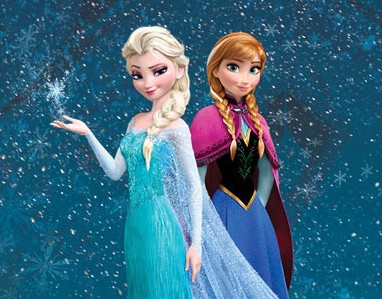
frozen

But Frozen takes yet another twist and takes the definition of love even further. At the last second Anna abandons her hope of being rescued by her friend Kristoff and instead thrusts herself in front of her sister, to save her from the now villainous prince. Her sacrifice ends up saving her, and we can see that it doesn’t matter who the love is directed towards; a man, a sister, a friend, if it is true sacrificial love, then it can break any curse.

Image Source: http://www.frozengamesfree.com/wallpapers/

Throughout the movie, we are shown that genuine love is not the romanticized story of a girl and boy falling for each other, it’s about putting another person’s needs before your own, even if they don’t deserve it. This is real sacrificial love.

Both the trolls who sing about falling in love with a fixer upper and the snowman that suggests “some people are worth melting for,” show us that love is real when you stop focusing on yourself and what you want and put your focus on what’s best for the other person.

And that’s why I love Frozen, it gives us a truer look at what love is.

Comments Off on Why I Love Frozen

Society, Morals, and Choice in Movies

10. Katniss Everdeen - Hunger Games

https://www.flickr.com/photos/wolfgangkuhnle/10511191683


Recently I’ve gone to see both the new Hunger Games movie and Ender’s Game in theaters. In the process of doing this I’ve also seen previews of a new movie coming out next year called Divergent. All of these movies are based on book series and all of them are coming out around the same time. And that’s not all that these movies have in common. They also bring up deep themes about society, morals, and choice, and the various perceptions of what’s right and what’s wrong.

Now these story lines are all unique and I haven’t read the Divergent series so I can’t say too much about how it fits into this trend, but it seems like there is a strong current towards these topics, at least in popular films. And I think it’s worth looking into.

Are these types of books and movies becoming more popular because the idea of being controlled by others and not being free to make your own decisions is a growing fear among the United State’s population?

Is it simply that stories that portray a darker future seem more realistic and connect with us more than the fantasies of years past?

Or is it just money hungry publishers and producers that saw one success and that led to others trying to mimic the successful book or movie and make some money?

In any case, I think it’s worthwhile to look more closely at what is similar in all of these story lines. In the Hunger Games we are given the perspective of Katniss, who is living in an unjust world that tries to punish the descendents of rebels in hopes of avoiding any future conflicts. Their punishment includes restrained freedoms, limited provisions, little privacy, and the horror of children being forced to kill each other in the Hunger Games. In essence it is a scary society, at least from Katniss’s perspective. And as the audience we can all agree with her that there is something sickly wrong with the way things are set up.

However, we are also given glimpses of another perspective, those of the people who are privileged and live in the Capitol. They seem completely unaware of the evils in this system. They have plenty to eat and happily go on eating after they are full, without thinking of the thousands of people who are starving. In addition, they focus on entertainment so much so that the Hunger Games becomes a grand event to be watched, celebrated, and invested in, instead of seeing it for the slaughter that it is.

To the audience, these opposite perspectives reveal how wrong the collective thought of a society can be. Just because everyone says “it’s okay,” or “it’s fun,” or “may the odds be ever in your favor” that doesn’t mean that what they’re talking about is morally right. Seeing this in the movie, could force us as the audience to start evaluating our own culture and what we view as right only because our society says it is, and not because it actually is. Similarities can be seen in our own culture as we hear about starving kids in Africa but still insist on eating our super-sized meal. The list could go on and on, with many subjects becoming touchy because it is real and affects us directly.

Ender’s Game, however, takes a different take on our world’s possible future. In this storyline, it is not people who are viewed as the enemy, but an alien species. In this world people fear the possibility of another attack from aliens so much that they decide to train children to become the best army possible. Kids are tested for brilliance and told that learning to kill is okay. I haven’t read the book series, so I could have some of this wrong, but I did at least see the movie. And it haunted me that young teenagers could be trained for a war, and told over and over that the tests they are going though are simply that; a test. Only to find out that the last test was no test at all, but a real war, that caused real deaths.
It was a horrifying realization to the main character, Ender, to find that he wasn’t winning a game, but he was killing real creatures and destroying their entire planet. He wished he had known the truth so that he could have acted differently.

I think this plays into our society as well. I’ve heard about countless debates over whether violent TV shows or video games are appropriate for children, or if they can be directly linked to real violence. This movie plays around with these thoughts and I think brings us some valuable questions.

When does something become more than a game?

Is it okay to trick kids, or use their intellect without their moral consent?

Who should be allowed to make the ethical decision: Is it generals, the government, or the individual who is doing the killing?

I think both of these movies have serious undertones that reflect our own culture’s perspective. There’s a reason that these movies and books are popular now, and not fifty years ago. Maybe the government taking control of health care is scary to people. Or maybe there’s a general fear of the future instead of a hope of better days to come. Who knows, there could be thousands of reasons, and each one could be different for each individual. But collectively as a society, something in these movies is striking a chord and resonating with people.

Comments Off on Society, Morals, and Choice in Movies